
Destination Thailand Visa (DTV) — Full Guide (Workcation + Soft Power + Dependents)
Complete DTV (“Destination Thailand Visa”) guide: all 3 categories (Workcation, Soft Power, Dependents/spouse), 5-year validity, 180 days per entry, required funds (500,000 THB), step-by-step eVisa application, extensions, rules, and common pitfalls.
Last updated: 22 Feb 2026.
Practical scenarios
- Remote worker (2–6 months): plan internet backup → Sim Cards Internet
- Soft Power activity: keep enrollment + payment evidence clean
- Dependent: prepare relationship evidence early
After you arrive (week 1)
- Save copies of your entry stamp and key documents
- Decide early if you’ll extend a 180-day stay
- If island hopping, plan around sea conditions: Sea Conditions Ferries
The Destination Thailand Visa (DTV) is a 5‑year, multiple‑entry visa that allows up to 180 days per entry (with a possible 180‑day extension per entry in Thailand). It was introduced as part of Thailand’s newer visa measures to support longer stays.
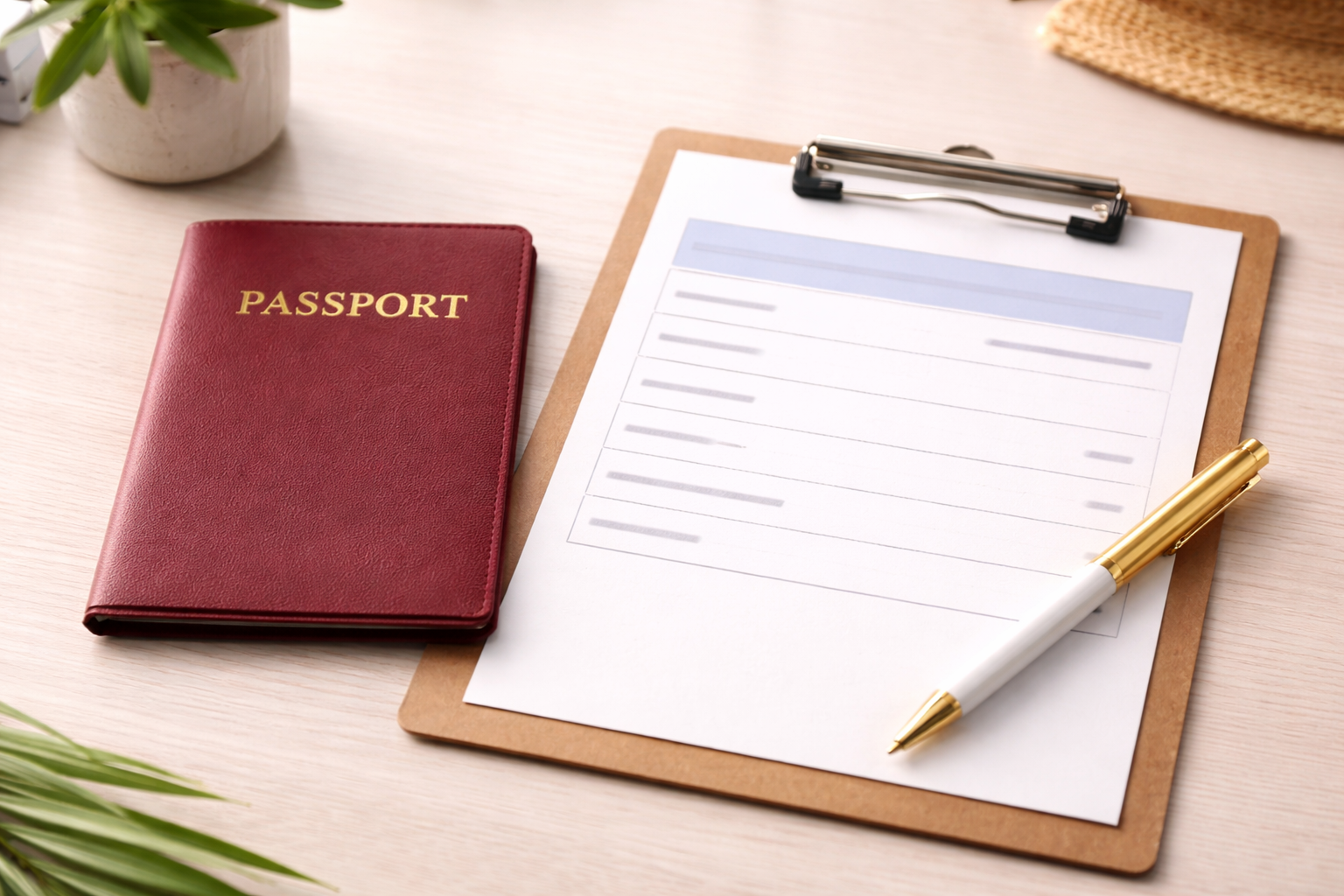
Most sites describe DTV as a “digital nomad / workcation visa”, but DTV actually has 3 categories:
1) Workcation (remote work / digital nomad / foreign talent / freelancer)
2) Thai Soft Power activities (e.g., Muay Thai, culinary training, seminars, medical treatment, etc.)
3) Dependents (spouse + children under 20 of a DTV holder) — often searched as “married to a DTV holder”.
This page is written for travelers: what it is, who it fits, how to apply, and how to avoid the common mistakes.
DTV at a glance
- Validity: 5 years (multiple entries)
- Stay per entry: up to 180 days
- Extension: you may be able to extend one time up to 180 days per entry at Thai Immigration
- After 180 + 180 days: you typically leave Thailand and re‑enter (while the visa is still valid)
- Key financial proof: typically 500,000 THB funds shown on bank statements (commonly last 3 months)
- Who it’s for: long-stay tourism + structured categories above
DTV is still processed by the Thai embassy/consulate that handles your application. Document details can vary by mission, so treat your local Thai embassy checklist as the final authority.
Quick decision: is DTV right for you?
DTV is a strong fit if…
- You want to stay in Thailand for months, not weeks
- You can show funds and proof of category (work, activity, or dependent relationship)
- Your income is foreign-sourced (for Workcation)
- You are comfortable doing occasional immigration admin: extensions, reporting if you stay long
Consider other options if…
- You only need a simple holiday (often Visa Exemption or a Tourist Visa is easier)
- You plan to work for Thai clients/employers (that typically requires a different setup: visa + work permission)
- You want a “years-long” solution with a structured program (see LTR, retirement, etc.)
Links:
The 3 DTV categories (what to apply under)
1) Workcation (Remote work / digital nomad / freelancer)
For: people earning abroad while living in Thailand.

Typical proof examples (varies by mission):
- Employment contract / certificate
- Business registration (if you own the business)
- Client contracts / invoices (freelancers)
- Professional portfolio
Practical rule of thumb: DTV “Workcation” is designed for foreign work + foreign income. If you plan Thai employment or Thai clients, talk to an expert first.
2) Thai Soft Power activities
For: people attending a recognized long-form activity in Thailand. Common examples include:
- Muay Thai training
- Thai culinary training
- Seminars / education-related programs
- Sports training
- Medical treatment
- Arts/music events and related activities
Typical proof examples:
- Confirmation of enrollment / booking from the training provider
- Appointment letter from a hospital/medical center (if medical treatment)
3) Dependents (Spouse + children under 20 of DTV holder)
This is the category people mean when they say “married to a DTV holder”.
Typical proof examples:
- Marriage certificate (spouse)
- Birth certificate (children)
- Adoption documents (if relevant)
Some missions may also ask for extra proof of financial support for dependents. Always check your local Thai embassy’s DTV page.
DTV documents checklist (what most applicants prepare)
Core documents (all categories)
- Passport biodata page (passport should be valid for your travel)
- Recent photograph (passport style)
- Proof of your current location / residence (varies by embassy)
- Financial evidence: bank statements typically showing ≥ 500,000 THB balance (commonly past 3 months; issued recently)
Category documents (add these)
- Workcation: employment/business/portfolio proof
- Soft Power: proof of confirmed activity or medical appointment
- Dependents: proof of relationship to the main DTV holder
Travel practicals
- Your first-night Thailand address (you’ll need it for TDAC)
- Proof of onward travel is sometimes asked at check-in/entry (especially if your plan is flexible)
Step-by-step: how the DTV application usually works
Most travelers apply through the official Thai e‑Visa system, which routes your application to the Thai embassy/consulate responsible for your current location.
1) Choose the correct Thai embassy/consulate jurisdiction (based on your residence/location)
2) Create an account on the Thai e‑Visa portal
3) Select Destination Thailand Visa (DTV) and the correct category
4) Upload all required documents (clear scans; watch file size limits)
5) Pay the fee (varies by embassy currency)
6) Wait for approval → download/save your e‑Visa document
7) Before travel: complete TDAC within the allowed window
Processing time varies by mission and season. Apply earlier than you think you need to.
Staying legal inside Thailand (extensions, reporting, and address rules)
Extending your stay
If you’re still in Thailand near the end of your 180-day permission, you may be able to extend:
- Start here: Extensions + Overstay
- Plan to go before your permission expires.
90-day reporting (only if you stay long enough)
If you remain in Thailand continuously for a long period, you may be required to do 90‑day reporting (separate from extensions).
Address reporting (TM30)
Your accommodation (hotel/landlord) usually handles TM30 address reporting, but it can matter when you apply for extensions.
More on forms: Immigration forms cheat sheet
DTV + arrival requirements (TDAC)
Even with a long-stay visa, you still complete Thailand’s arrival requirements:
Common pitfalls (save yourself stress)
- Applying under the wrong embassy jurisdiction (biggest preventable mistake)
- Uploading blurry scans / mismatched names across documents
- Not matching your category to your proof (Workcation vs Soft Power vs Dependent)
- Assuming “visa = work permission” (Thai work rules can be separate)
- Waiting until the last minute to plan extensions/reporting
Frequently asked DTV questions
Can I “switch” categories later?
Usually you apply under one category. If your circumstances change, ask your embassy or Immigration about your options.
.png)
Do I need a Thai bank account?
Not for the initial application. Most missions accept foreign bank statements as proof of funds.
Can my spouse/children stay with me?
Yes — that’s category (3) Dependents. They apply with relationship proof.
Do I have to leave after 180 days?
You can either extend (if eligible) or exit and re‑enter while the visa remains valid.
Official sources (recommended to check before applying)
- DTV PDF overview (official): https://image.mfa.go.th/mfa/0/RzaiZWKBzF/consular/Visa/18.DestinationThailandVisa_%28DTV%29.pdf
- Royal Thai Consulate‑General (Los Angeles) DTV page (includes all 3 categories): https://thaiconsulatela.thaiembassy.org/en/publicservice/dtv-visa?cate=61a8019ec0e81b444e7a5b52
- Royal Thai Embassy (Helsinki) DTV page (category details + updates): https://helsinki.thaiembassy.org/en/publicservice/destination-thailand-visa-dtv
- Ministry of Foreign Affairs (context on visa measures): https://www.mfa.go.th/en/content/thailandnewvisa-en
- Thai e‑Visa application manual: https://www.thaievisa.go.th/static/English-Manual.pdf
AFFILIATE SLOT (future): Long-stay travel insurance box + coworking + serviced apartments. Place after “Staying legal” section.
Return to hub: Entry & Visas