Thailand SIM Cards & Internet (eSIM + Mobile Data + Long‑Stay Setup)
Stay connected in Thailand: best local providers (AIS/True/dtac), eSIM vs physical SIM, airport vs city purchase, realistic speeds, coverage tips, and long-stay internet setup for remote work and families.
Last updated: February 22, 2026
Getting online fast in Thailand is easy — if you pick the right option for your trip length and avoid the few common traps (overpaying at the airport, buying the wrong plan, or discovering your phone is locked).
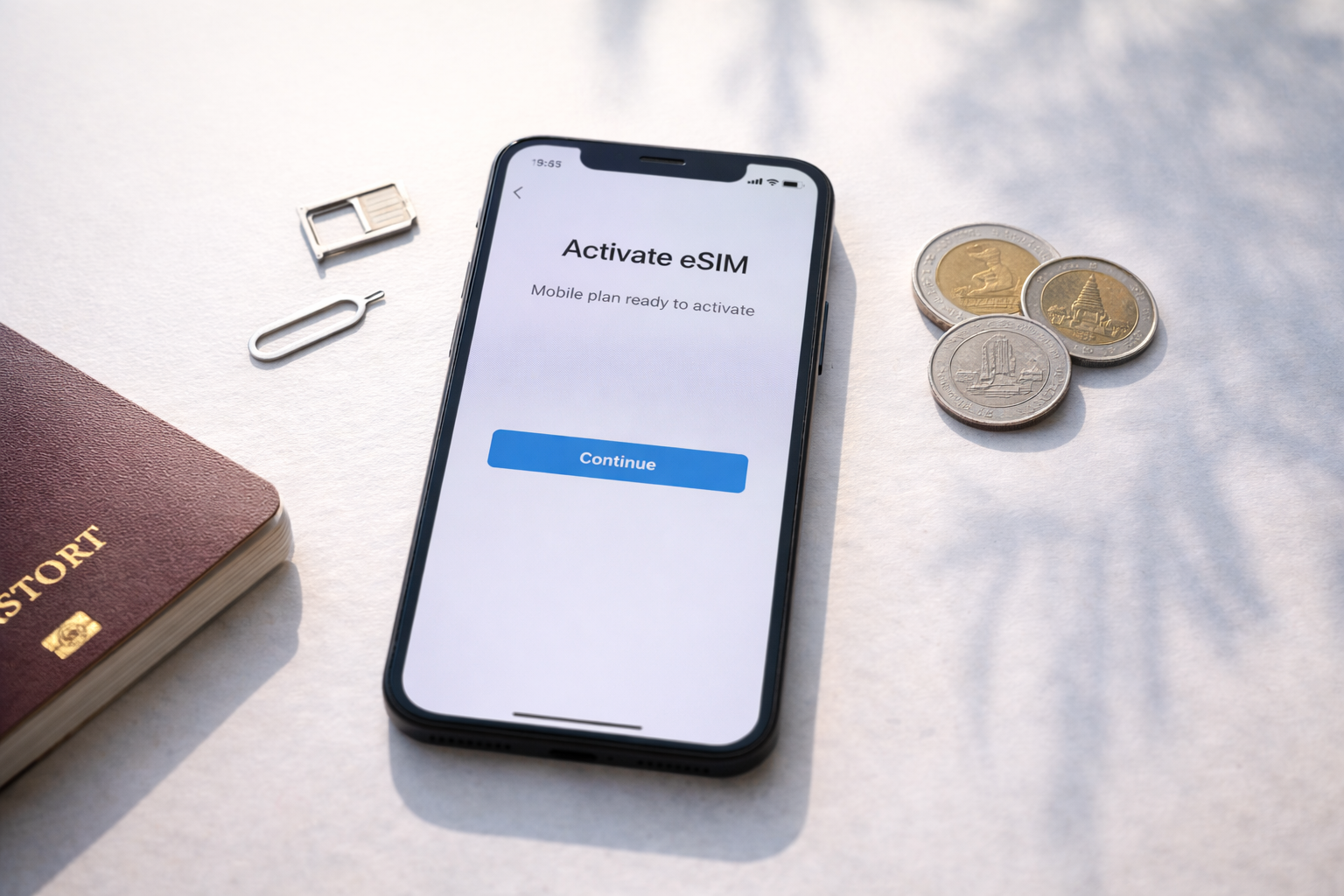
If you want the easiest setup: use an eSIM before you fly, activate on landing, and keep your physical SIM slot free.
Pick based on trip length:
1–14 days: tourist eSIM/SIM is usually easiest.
15–30 days: a bigger data plan + top‑ups (or a 30‑day tourist plan) is usually best.
30+ days / remote work: get a Thai number, a monthly data plan, and a backup connection (second SIM or home Wi‑Fi).
First time in Thailand? Use the arrival checklist: First Time
AFFILIATE SLOT (future): “Best eSIMs for Thailand” comparison banner
Best providers in Thailand
Thailand’s main consumer mobile networks are commonly discussed as:
AIS (often best overall coverage/reliability)
TrueMove H (often strong in cities and competitive 5G)
dtac (often good value; brand is part of the True group, but plans and storefronts may still differ)
Which one should you choose?
Choose AIS if you care most about: overall coverage, fewer dead zones when you leave major cities. Choose True if you care most about: strong city performance, frequent promotions, bundling with home internet if you settle. Choose dtac if you care most about: value plans and you’re mainly in cities/tourist areas.
Reality check: all three work well in most traveler situations. The difference shows up when you go rural, island-hop, or rely on consistent hotspot work.
eSIM vs physical SIM
eSIM (recommended for most travelers)
Pros
Activate before landing (instant data on arrival)
No tiny SIM tray juggling
Great for short trips and multi‑country travel
You can keep your main SIM active for SMS/OTP
Cons
Your phone must support eSIM and be unlocked
Some plans are data‑only (no Thai phone number)
Best for: first‑timers, short trips, anyone who wants the least friction.
Physical SIM
Pros
Works with any unlocked phone
Often easy to buy and top‑up locally
Usually includes a Thai number
Cons
Airport kiosks can be more expensive
Can be annoying if you need your home SIM for banking SMS
Best for: longer stays, people who need a Thai number for local apps, travelers with non‑eSIM devices.
Pro tip: Dual‑SIM phones are ideal: keep home SIM for banking SMS, use Thai SIM/eSIM for data.
Airport vs city purchase
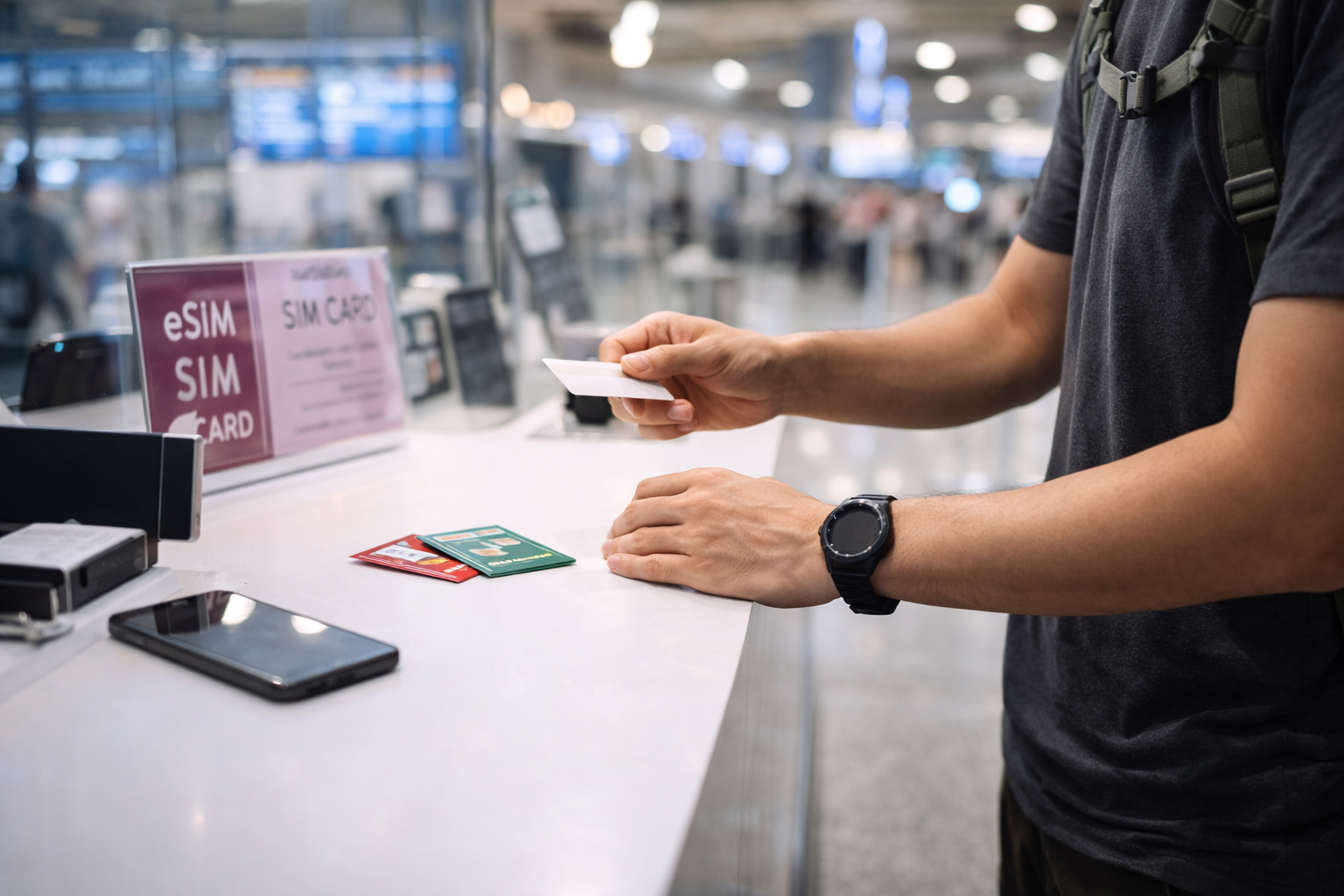
Buying at the airport (fast, convenient)
Good if: you want zero stress and don’t mind paying a little more for convenience. How it usually works: show passport → choose plan → staff installs and tests.
Buying in the city (often better value)
Good if: you want better deals and don’t mind spending 20–30 minutes after arrival.
Where to buy:
Official provider shops (most reliable)
Convenience stores (often sell SIMs + top‑ups)
Malls (provider kiosks)
“Best of both worlds”
Use an eSIM for day 1–2
Switch to a long‑stay plan later if you need it
Data speeds (what to expect)
Thailand has good mobile internet in most populated areas. Your real‑world speed depends on:
Location (city center vs rural vs island interior)
Congestion (peak hours, festivals, weekends)
Your plan (some plans have speed caps or “fair use” limits)
Your phone (bands, 4G/5G support, modem quality)
What “good enough” means
Messaging + maps: easy on any plan
Video calls: stable connection matters more than peak speed
Hotspot work: plan for stability + have a backup
Action: test your connection the first day in your accommodation. If it’s unstable, change plans or add a backup SIM.
Coverage comparison (where each is strong)
Use this as a practical expectation, not a promise:
Cities (Bangkok, Chiang Mai, Phuket towns): all are strong
Highways and provincial towns: AIS is often the safe pick
Islands: coverage depends on the island and where you stay (beach strips are usually better than interior hills)
If you’re planning islands, combine this page with:
1) Arriving with no data (then negotiating taxis while tired)
2) Buying a plan that looks “unlimited” but becomes slow after a small threshold
3) Forgetting your phone is SIM‑locked
4) Not having a Thai number when you need local OTP verification
5) Relying on accommodation Wi‑Fi without testing (video calls suffer)
6) No backup for important work days
FAQs
Do I need to register a SIM in Thailand?
Most purchases require basic registration using your passport. This is normal and quick.
Is eSIM better than physical SIM?
For short trips and convenience, yes. For long stays and Thai-number needs, a physical SIM (or eSIM with number) can be better.
Can I hotspot from my Thai data plan?
Usually yes, but some plans restrict tethering or slow down after a threshold. Test it.
What’s the cheapest way to stay connected?
A city-purchased SIM with a monthly plan is often better value than airport tourist bundles — but an eSIM is the easiest.
Will mobile data work well on islands?
Usually yes around main beach/town areas, but it varies. If your work is critical, bring a backup connection.
Should families get one SIM per person?
Often: one “main” data plan + hotspot works, but kids streaming can burn data. Two plans can reduce stress.