Thailand Insurance Guide (Travel Insurance + Health Cover)
Thailand insurance guide: why you need cover, realistic hospital cost ranges, travel vs expat insurance, visa-specific insurance requirements (where applicable), and common exclusions like scooters and pre-existing conditions.
Last updated: February 22, 2026
Insurance is one of those things you don’t think about — until you need it. In Thailand, the big risk isn’t “everyday illness.” It’s one unexpected event (scooter accident, dehydration + hospital visit, food poisoning requiring IVs, a fall, or a sudden flare-up).
This page helps you choose the right cover for your trip length and travel style, and avoid the most common exclusions that surprise travelers.
Quick summary (what to buy)
Short trip (up to ~30 days): buy travel insurance with strong medical coverage + emergency assistance.
Long stay (1–12 months): consider expat/health insurance or a travel policy that allows long durations and renewals.
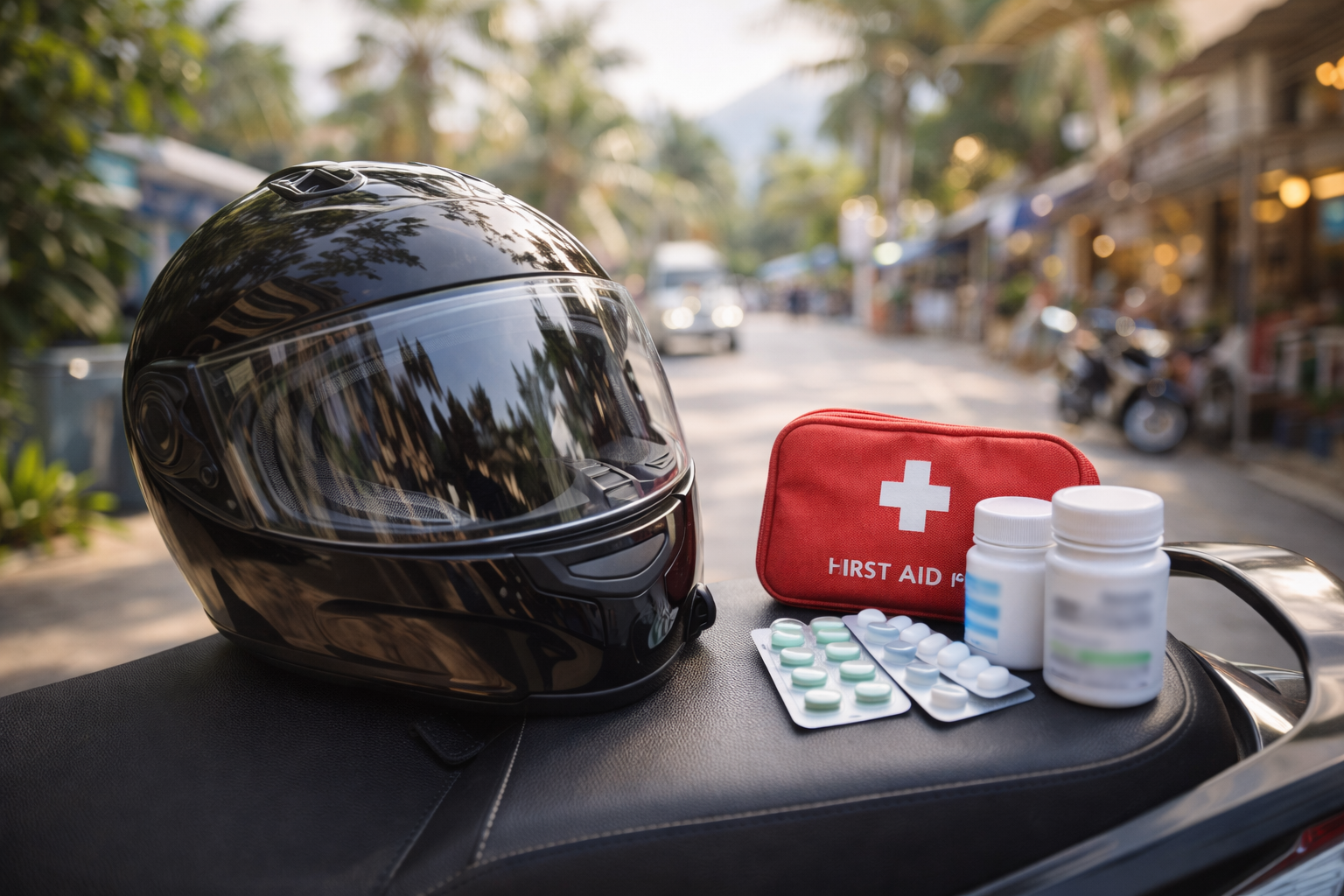
High-risk activities (scooter, diving, climbing): make sure your policy explicitly covers it — many don’t by default.
If you’re planning visas and long stays, start here:
- Entry & visas hub: Entry Visas
- Safety & health basics: Safety Health
AFFILIATE SLOT (future): “Best travel insurance for Thailand” comparison banner
Why you need insurance in Thailand
Thailand has excellent private hospitals in major cities — but they can be expensive if you pay out of pocket, especially for:

- emergency treatment
- imaging (CT/MRI)
- surgery
- ICU or extended stays
Insurance also helps with:
- medical evacuation or repatriation (rare, but extremely expensive)
- trip interruption/cancellation (depending on policy)
- lost baggage (less important than medical, but still useful)
The biggest real-world issue: scooter accidents and road injuries. If you plan to ride, your policy details matter.
Typical hospital costs (rough ranges)
These are planning ranges to help you understand “order of magnitude.” Costs vary by city and hospital tier.
Outpatient (private hospitals)
- GP consultation: ~800–1,500 THB
- Specialist consultation: ~1,500–3,000 THB
- Basic lab tests: often additional
Emergency
- ER facility + evaluation: ~2,000–5,000 THB (before tests/treatment)
- Minor treatment can rise quickly once imaging/meds are added
- Major trauma can become very expensive
Hospital stays
- Standard/private room: commonly several thousand THB per night
- ICU can be dramatically higher
Common “big bill” events
- Appendectomy: often tens to low hundreds of thousands THB
- Orthopedic injuries or surgeries: can climb significantly
- Severe accidents: can escalate into very high totals fast
Planning takeaway: it’s easy to self-pay small outpatient visits. It’s not easy to self-pay a serious accident.
Travel vs expat insurance
Travel insurance (best for trips)
Best for: vacations, multi-country travel, trips with flights and bookings
Strengths: emergency medical + trip disruption + baggage
Weak points: may have lower ongoing outpatient coverage, limited renewals, strict exclusions
Expat / health insurance (best for long stays)
Best for: living in Thailand, retirees, long-stay remote workers, families with kids
Strengths: broader medical coverage, ongoing care, sometimes direct billing networks
Weak points: more paperwork, underwriting, pre-existing conditions often excluded or limited
Rule of thumb:
If you’re staying long enough that Thailand is your “base,” health insurance becomes more logical than a short travel policy.
Visa-specific insurance requirements
Not every visa requires insurance — but some do, and requirements can change depending on where you apply and how you extend.
Use these as planning guidelines and always check the specific visa page on this site:
Retirement visas (O‑A / O‑X)
Insurance is commonly required for retirement long-stay categories. Coverage thresholds and accepted documentation can vary by embassy/immigration office and can change.
- Retirement O-A guide: Retirement Oa
- Retirement O / other retirement routes: Retirement O
Long-Term Resident (LTR)
LTR eligibility includes a health insurance pathway (or alternatives such as social security coverage or certain deposit options, depending on category).
- LTR guide: Ltr
DTV, tourist routes, and short stays
These usually do not require insurance as a formal condition — but insurance is still strongly recommended, especially if you ride scooters or do water activities.
- DTV guide: DTV Remote Work
- Tourist visa: Tourist Visa
- Visa exemption: Visa Exemption
Common exclusions (read this!)
This is where travelers get burned. Common exclusions include:
Scooters / motorbikes
- Not covered if you don’t have the correct license
- Not covered if you weren’t wearing a helmet
- Not covered above certain engine sizes
- Not covered if you’re intoxicated
If you plan to ride, read your policy carefully.
Alcohol and risky behavior
Many policies reduce or deny claims linked to intoxication.
Pre-existing conditions
- Often excluded unless declared and accepted
- “Pre-existing” can include chronic issues and even recent symptoms
Adventure sports
Diving, climbing, trekking, Muay Thai training may require add-ons.
Pregnancy / newborn / pediatrics
Family travelers should check maternity and pediatric coverage carefully.
How to choose a policy
Use this checklist:
1) Medical coverage limit: choose a limit that matches your risk tolerance
2) Emergency assistance: 24/7 hotline + clear process
3) Hospital access: direct billing network vs reimbursement
4) Exclusions: scooters, alcohol, sports, pre-existing
5) Deductible: higher deductible can reduce premium, but increases out-of-pocket
6) Duration & renewals: important for 1–6 month stays
7) Document needs: if your visa requires insurance proof, ensure you can obtain the right certificate wording
What to carry + what to do in an emergency
Carry (digital + offline)
- Policy PDF and emergency hotline
- Your passport photo page copy
- Your Thai address/hotel details
- Any allergies/medical notes
If you need care
- For urgent issues, go to the nearest suitable hospital
- Call your insurer early if they require pre-authorization
- Keep receipts and discharge summaries for claims
Safety/health essentials: Safety Health
FAQs
Is insurance “worth it” for Thailand?
If you do nothing risky, you might never use it. But a single accident can cost more than many years of premiums.
Do I need insurance if I only stay 2 weeks?
Strongly recommended — especially if you ride scooters or plan boat tours.
What if I have a pre-existing condition?
Look for a policy that explicitly covers it (often at a higher price) or plan to self-pay routine care and insure for emergencies.
Is scooter riding the biggest risk?
For many travelers, yes. That’s why scooter exclusions matter so much.
Should families buy insurance for kids?
Yes. Kids get sick and injured in normal ways—coverage reduces stress dramatically.
Next steps
- First time checklist (SIM, cash, arrival flow): First Time
- Family travel guide: Family
- Retiree guide: Retiree
- Digital nomad guide: Digital Nomad
- Entry & visas hub: Entry Visas