
Thailand Digital Nomad Starter Guide (Bases, Internet, Routines, and Reality)
First time in Thailand? A practical arrival checklist: airports, SIM/eSIM, cash, transport, safety, etiquette, and emergency numbers.
Quick summary
Best bases for most nomads: Chiang Mai (routine) + Bangkok (big city) + one beach reset
Internet: get a strong SIM/eSIM plan + a backup
Accommodation: prioritize desk, quiet, and location over “Instagram views”
Legal note: choose an appropriate entry route for your stay length → Entry & Visas hub

AFFILIATE SLOT (future): eSIM comparison banner for remote workers
Pick your base (fast)
Chiang Mai (best “routine city” for many nomads)
Why it works:
- calm neighborhoods
- café culture + work-friendly vibes
- easier daily life rhythm than big-city Bangkok
Start here: Chiang Mai guide
Bangkok (best for big-city energy + networking)
Why it works:
- endless food and neighborhoods
- great transport options
- easy to meet people and find events
Start here: Bangkok guide
Beach base (best for reset weeks)
Good for:
- after a focused work sprint
- short “recovery weeks”
- mixing mornings work + afternoons beach
Start here:
Internet, eSIM, and phone plan setup
The best setup (reliable + low stress)
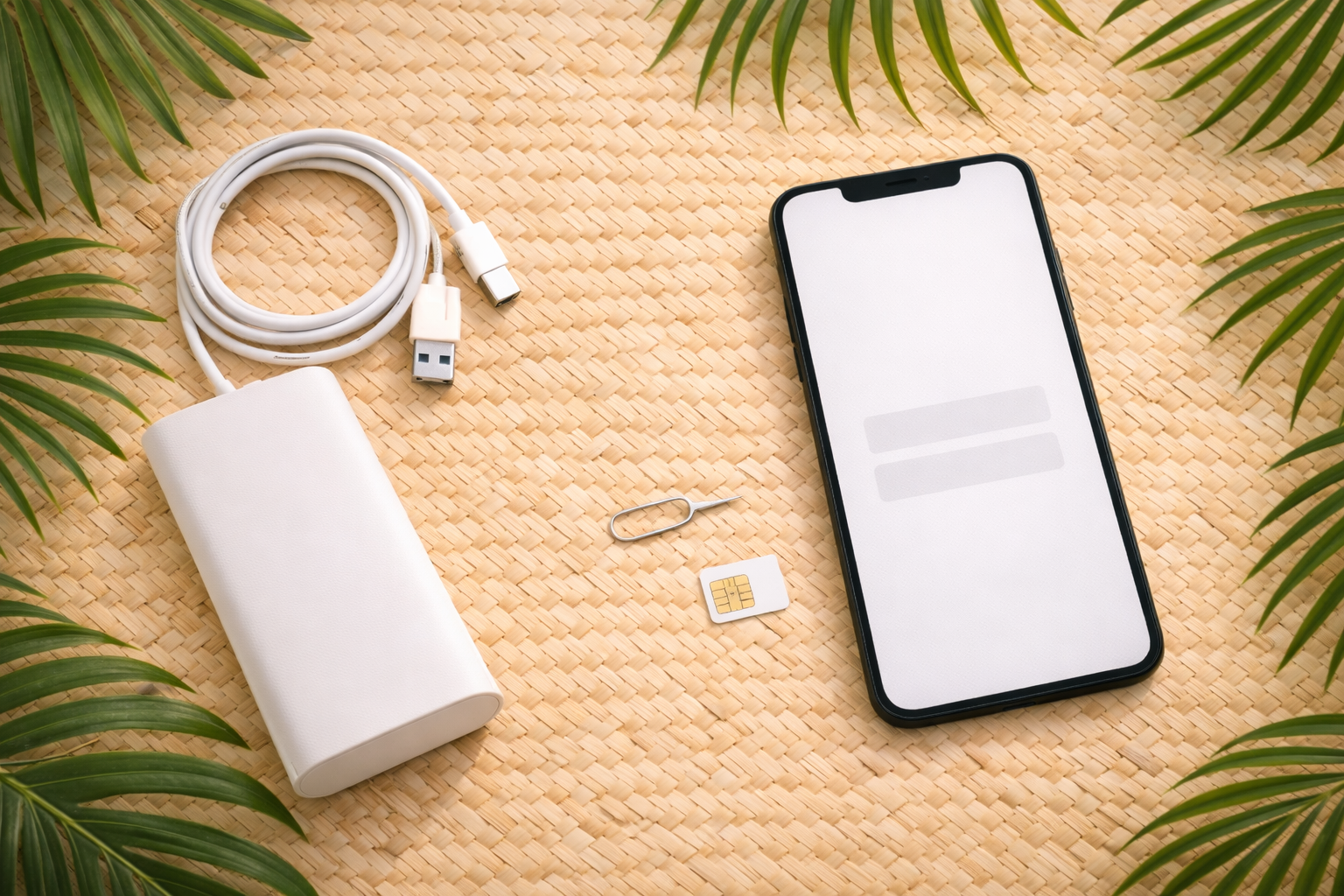
- Primary plan: strong data package (SIM or eSIM)
- Backup: second eSIM or secondary SIM if your work is mission-critical
- Portable hotspot: optional, useful if you do calls daily
Pro tip: if your work depends on stable calls, don’t rely on café Wi‑Fi alone.
AFFILIATE SLOT (future): “Best Thailand eSIMs for remote work” widget
Accommodation that actually works for productivity
When nomads struggle in Thailand, it’s often because the apartment is:

- loud
- far from food/transport
- has bad Wi‑Fi or unstable power
- has no desk or poor lighting
Checklist for a good work base
- desk or table you can work at comfortably
- quiet at night (and ideally mid-day)
- reliable Wi‑Fi (ask for speed test if possible)
- location: walkable to food + essentials
Where to stay strategy
- book 3–5 nights first
- extend once you’ve tested noise + Wi‑Fi
- don’t commit to a month on day one unless it’s refundable
Work routine that survives Thailand
Thailand can be very “tempting.” The key is a rhythm.
A simple daily structure
- Morning: deep work (2–4 hours)
- Midday: lunch + heat break
- Afternoon: lighter tasks / cowork / calls
- Evening: exercise + dinner + social (optional)
Weekly rhythm
- 3 focused work days
- 2 hybrid days (work + exploring)
- 1 full rest day
- 1 flexible day (admin, errands, travel planning)
Visas and staying longer (overview)
Thailand entry rules change over time, so treat this as an overview and always confirm your exact route.
Start with the hub: Entry & Visas
Common pathways nomads explore:
- shorter stays using tourist routes (best for “test trips”)
- longer-term options if you want a stable base
If you want a long-stay remote-work-focused route, start here:
Important: avoid building your life on unclear assumptions. The “best” visa is the one you can follow correctly.
Money, banking, and payments
What works well
- 2 cards (main + backup)
- a small cash reserve
- a “fee strategy” (avoid many tiny ATM withdrawals)
For realistic costs:
Health, safety, and burnout prevention
Thailand is easy to love — but heat + movement + social life can burn you out.
High-impact health habits
- hydrate and take heat breaks
- mosquito protection in evenings
- protect your sleep (noise + late nights add up)
Safety basics:
AFFILIATE SLOT (future): Travel insurance comparison widget
Nomad FAQs
Is Thailand good for productivity?
Yes — if you choose the right base and housing.
Where should I start for my first nomad month?
Chiang Mai is a common “easy mode” base for routines.
Do I need a coworking space?
Not always. Many people alternate: café mornings + cowork afternoons when they need calls.
Should I rent monthly right away?
Better: book a short stay first, then extend once you’ve tested noise + internet.
What to read next
- Planning a month? → 1-month slow travel plan
- First time in Thailand? → Arrival checklist
- Want a copy‑paste route? → 7-day itinerary or 14-day itinerary