First Time in Thailand: Essential Tips + Arrival Checklist (No Stress Edition)
First time in Thailand? A practical arrival checklist: airports, SIM/eSIM, cash, transport, safety, etiquette, and emergency numbers.
Quick summary (save this)
Do these in order:
- Complete your entry steps (arrival requirements + visa route) → Entry & Visas hub
- Get data (eSIM/SIM) before or right after landing
- Get cash (ATM + small notes) + avoid terrible exchange rates
- Use official transport options (train, airport taxi, Grab/Bolt) — don’t negotiate while tired
- Check into your hotel, eat, hydrate, sleep
- Plan only tomorrow tonight (not your whole trip)
AFFILIATE SLOT (future): “Best eSIMs for Thailand” comparison banner
Before you fly
1) Choose your entry route (don’t guess)
Thailand entry choices depend on your nationality and trip length. Start here:
- Entry & Visas hub
- If you’re staying longer / working remotely, read: DTV guide
- If you’re doing language school: ED guide
Rule of thumb: if you’re not sure, choose the option with the least uncertainty (clear paperwork + clear length).
2) Book your first 2 nights (even if you’ll move later)
For first-timers, the best “stress reducer” is a booked place for your first nights.
- In Bangkok, pick an area with easy transport and lots of food nearby.
- If you land late, choose a hotel with 24h check-in or clear instructions.
3) Install these apps before you land
- A ride-hailing app (so you’re not negotiating while tired)
- A map app with offline download
- A translation app
- Your airline + accommodation booking confirmations
4) Pack for heat + temples + sudden rain
Use the real-world list here: Thailand packing list
Landing day: the first 2 hours
Here’s the flow that makes arrivals feel smooth.
Step 1: Immigration + entry requirements
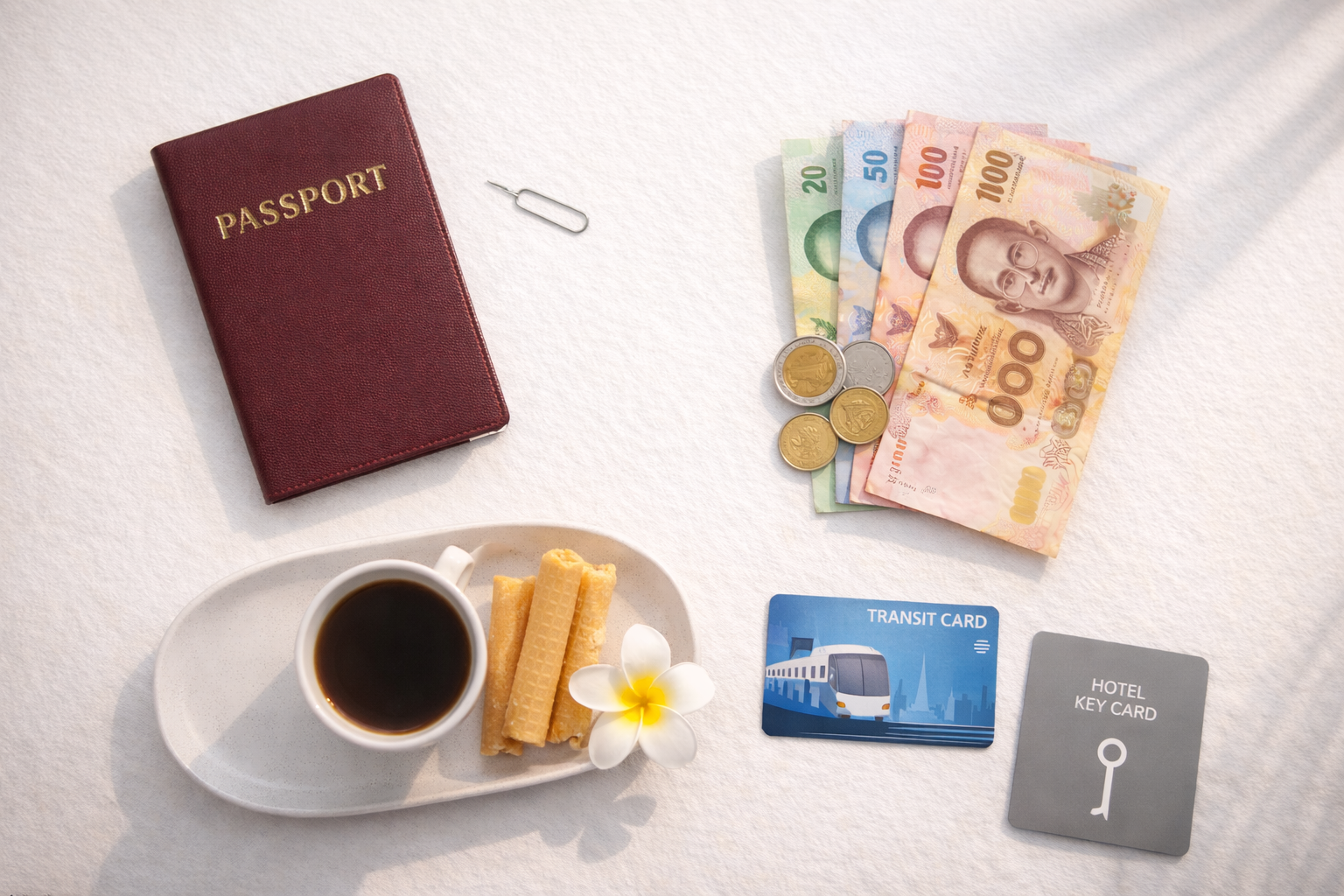
- Have your passport, boarding pass, and any required entry confirmations ready.
- If you need to complete an arrival form, do it before you queue (when possible).
Start with: TDAC / arrival requirements
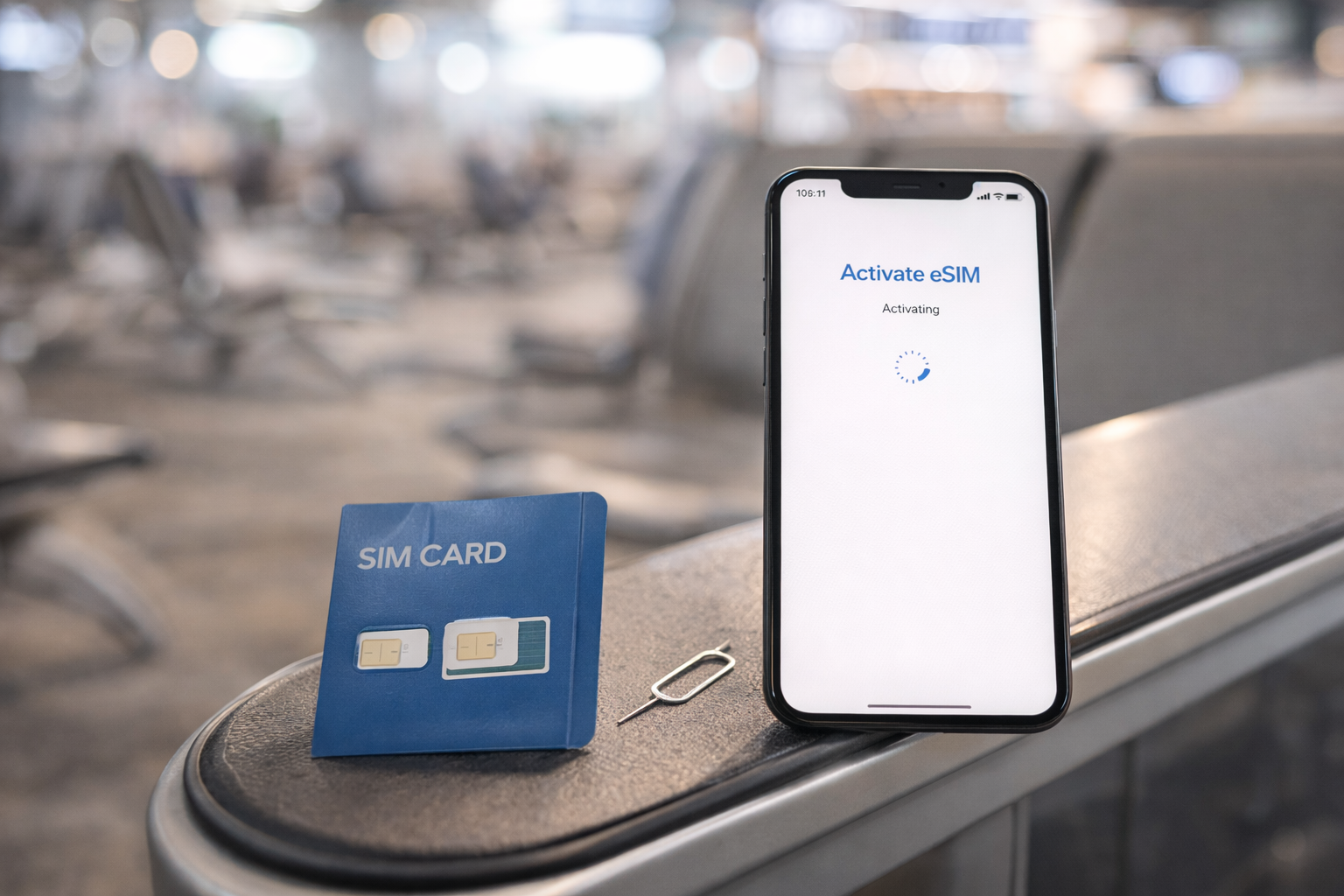
Step 2: Get online (SIM or eSIM)
Do this early. Data makes everything easier: maps, Grab/Bolt, hotel messages, banking OTPs.
- If you like “set and forget,” eSIM is often easiest.
- If your phone doesn’t support eSIM, buy a physical SIM at the airport or in the city.
More detail: SIM/eSIM strategy inside the Nomad guide
Step 3: Get cash (ATM strategy)
Thailand is cash-friendly. Even if you mostly pay by card, you’ll want cash for: street food, small restaurants, markets, tips, taxis, temples.
Good approach:
- Withdraw once (not five times) to reduce fees.
- Take small notes too (20/50/100s) for day one.
Budget planning: Thailand travel budget
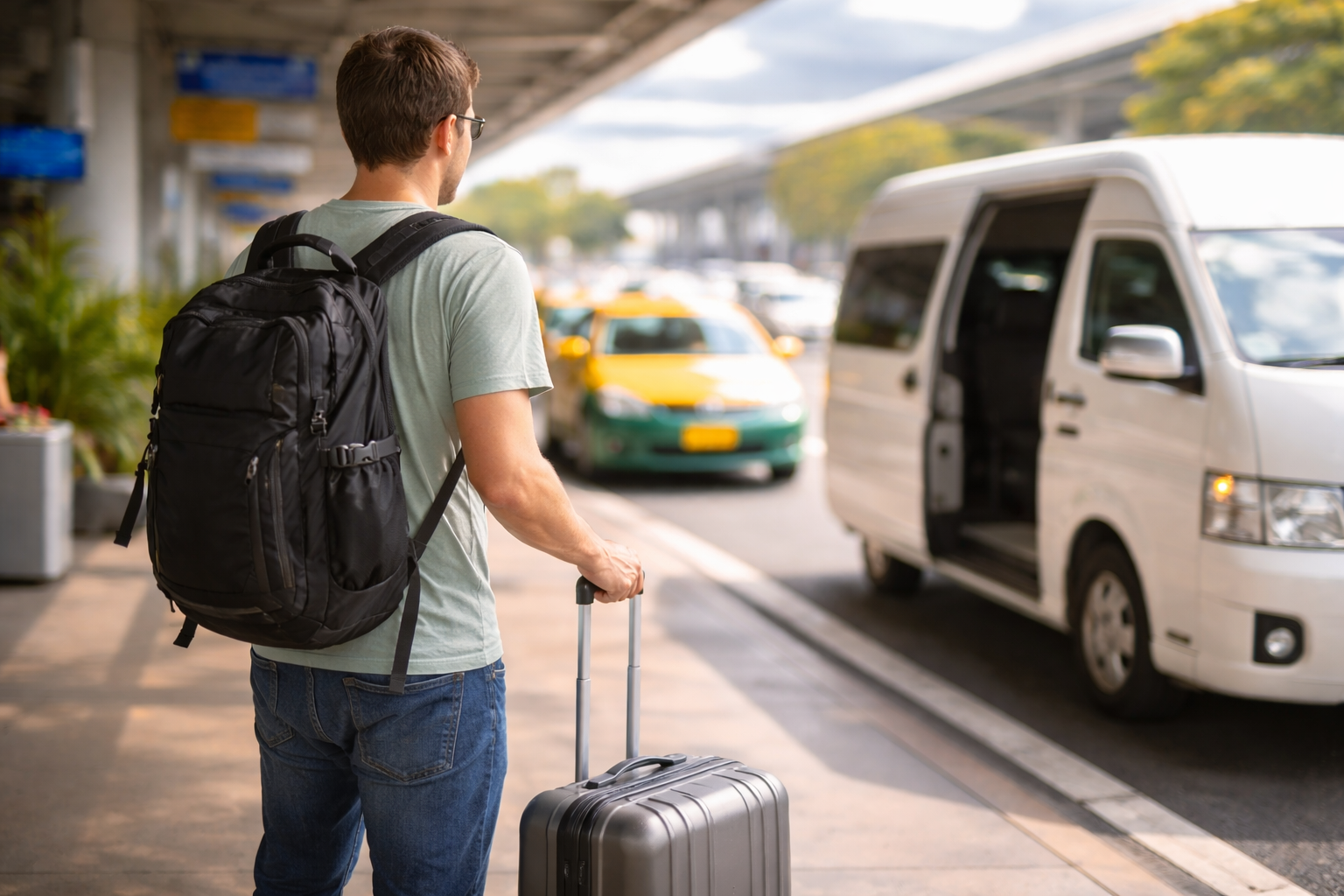
Step 4: Get to your hotel safely
Avoid the “first-day overpay.” Use:
- Airport rail / train (where available)
- Official airport taxi queue
- Grab/Bolt pickup zones
If someone approaches you offering “special taxi,” say “no thanks” and keep walking.
Bangkok airports: BKK vs DMK
Bangkok has two airports:
- BKK (Suvarnabhumi): most long-haul/international + many domestic
- DMK (Don Mueang): many low-cost regional and domestic flights
What matters for you:
- Your hotel area (BKK is more convenient for some areas, DMK for others)
- Your domestic connection (leave time — Bangkok traffic is real)
If Bangkok is your base, use the Bangkok guide to pick an area that reduces commute pain:
SIM vs eSIM (what’s easiest)
eSIM is best if:
- You want data working the moment you land
- You don’t want to find a shop while tired
- You’re comfortable scanning a QR code and setting up
Physical SIM is best if:
- Your phone doesn’t support eSIM
- You prefer in-person setup help
- You want to browse packages face-to-face
Pro tip: if you’ll do island hopping, prioritize coverage and reliability over saving a few baht.
Money on day one
Avoid these common money mistakes
- Exchanging at a random booth with a poor rate
- Withdrawing tiny amounts repeatedly (fees add up)
- Having only large notes for small purchases
- Assuming every place takes card (many don’t)
Simple day-one money kit
- 1–2,000 THB in small notes for immediate costs
- 1 card that works abroad (backup in your bag)
- A screenshot of your bank’s international help number
Transport without overpaying
Your best “first-trip” rules
- Use Grab/Bolt or the official taxi queue when tired
- If you negotiate (tuk-tuk), agree on price before you get in
- Use trains/metro where practical (Bangkok especially)
If transport is a big worry, read:
Food, water, and first night safety
Thailand food is one of the best parts of the trip — you don’t need to be nervous, just sensible.
Easy first-night strategy
- Choose a busy place where food turns over fast
- Start with grilled/stir-fried dishes if your stomach is sensitive
- Hydrate: heat + travel = dehydration sneaks up
Water
- Drink bottled/filtered water
- In hot months, add electrolytes if you’re sweating a lot
Health + safety basics: Safety & health guide
Common mistakes (and how to avoid them)
Mistake 1: Too many destinations
Thailand is not “small.” Travel days can eat your trip. Fix: pick fewer bases → Start Here hub
Mistake 2: Negotiating everything on day one
You’ll overpay when jet-lagged. Fix: use apps/official transport for day one, negotiate later.
Mistake 3: Planning every hour
You’ll miss the best moments. Fix: plan mornings, leave afternoons flexible.
Mistake 4: Not thinking about seasons
The beach you choose can matter by month. Fix: read Plan by month
First-time Thailand mini FAQs
Is Thailand safe?
Generally, yes — the biggest risks are road safety and common scams. Start here: Safety & health
Do I need cash?
Yes. Not everywhere takes card, especially small shops and markets.
Should I book domestic flights in advance?
If traveling on weekends/holidays or during peak season, yes.
How long should my first trip be?
7 days works, 14 days feels comfortable, 1 month is amazing if you can slow travel.
What to read next
- If you want a plan you can copy: 7-day itinerary or 14-day itinerary
- If you’re staying longer: 1-month slow travel plan
- If you’re working while traveling: Digital nomad starter guide
- If you want costs: Thailand travel budget