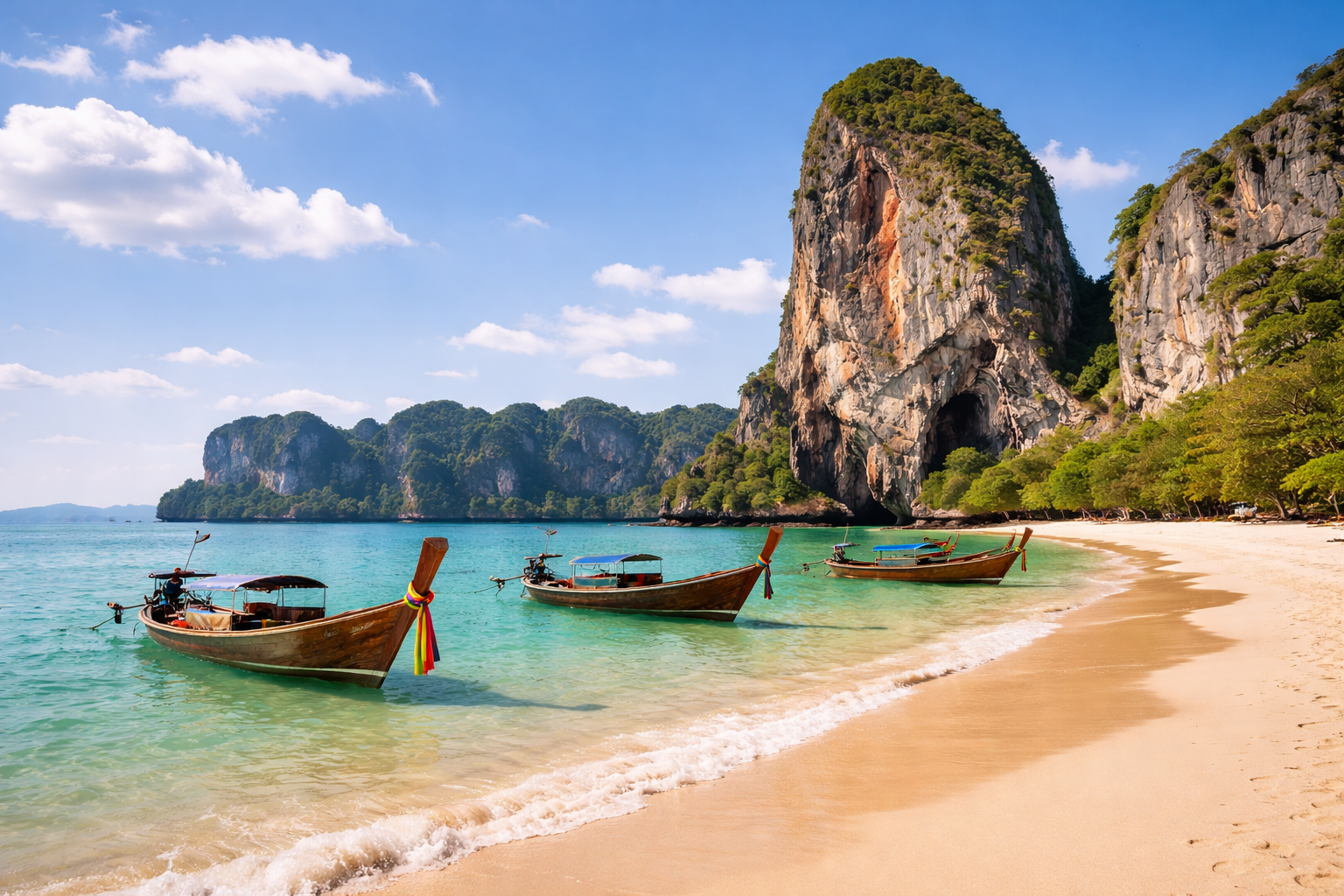
Krabi Travel Guide
Local guide to Krabi: best time to visit, how to get there, where to stay, and top things to do.
Krabi is a strong pick for travelers who want limestone cliffs, beaches, Railay, easy island access.

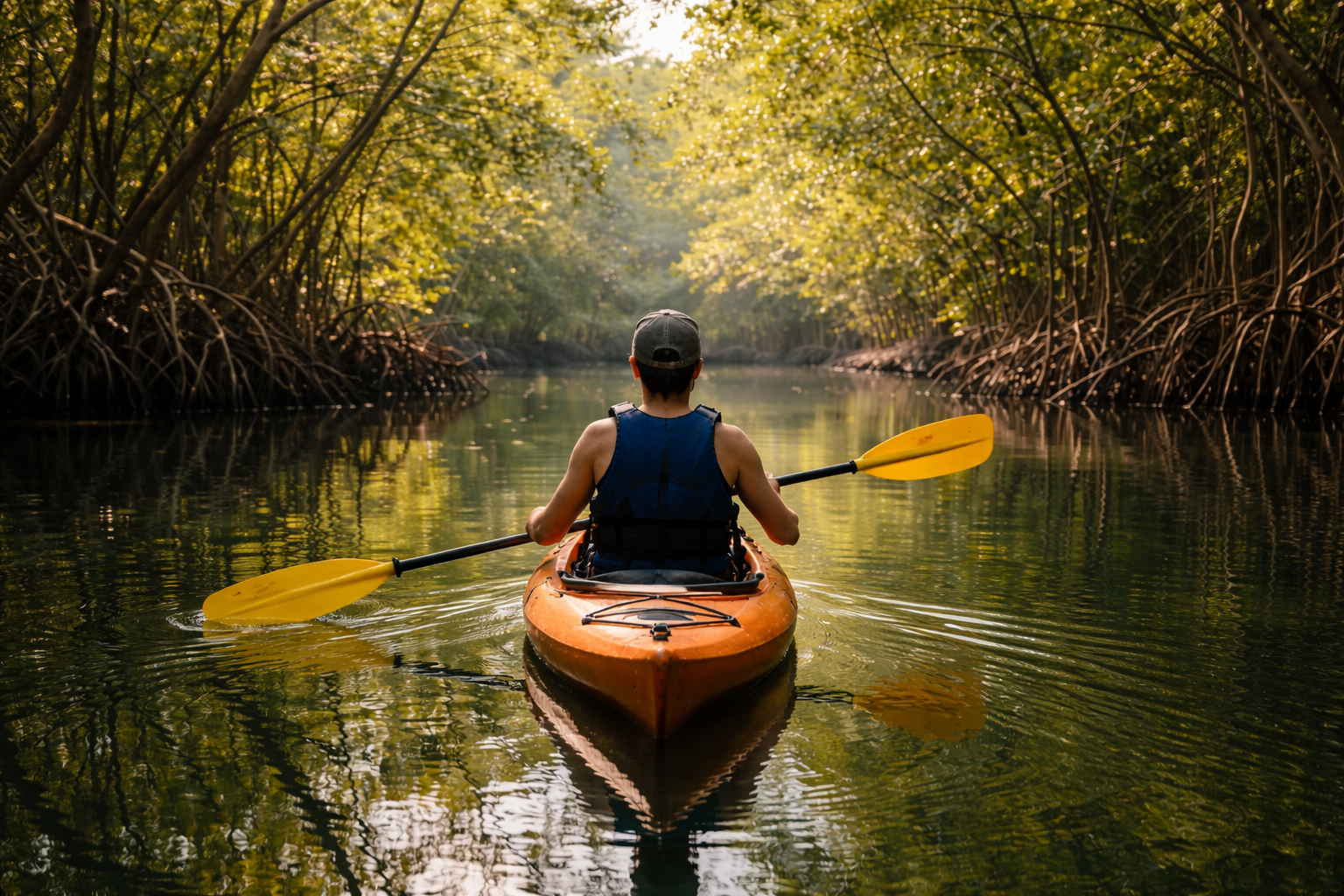
Best for: scenery, climbing, island day trips, quieter than Phuket
Maybe skip if: you want big-city nightlife
Quick facts
- Ideal stay: 3–6 nights
- Best areas to base yourself: Ao Nang (convenient), Railay (scenic, car-free), Krabi Town (local feel)
- Top experiences: Railay beaches, Tiger Cave Temple (steps!), Island tours (Hong/4 Islands)
Best time to visit
Thailand’s seasons affect comfort more than “can you visit.” Plan around heat, rain, and sea conditions:
- Cooler months: easiest for long walking days.
- Hot season: do outdoor sights early/late; plan mid-day breaks.
- Rainy season: build flexibility; short downpours are common.
If this destination involves islands/boats, check:
Who should skip this place
This destination is not the best match if:
- you strongly dislike crowds and busy tourist strips
- you want zero transfers but the destination requires boats/long drives to experience fully
- you’re sensitive to heat and plan intense outdoor days at midday
If unsure, use: Choose your base
How to get there
Fly to Krabi airport or transfer from Phuket; ferries connect in season.
Planning tip: if you’re combining multiple regions, choose 2–3 bases and do day trips from each:
Where to stay
Best areas by traveler type (quick picks)
- First-timers: walkable base + easy transport
- Couples: calmer evenings + dining nearby
- Families: quieter streets + short transfers
- Retirees: comfort-first, minimal stairs
- Digital nomads: stable Wi‑Fi + cafés/coworking nearby (backup mobile data)
Deep dives: Accommodation
Instead of hunting a “perfect hotel,” pick a base area that matches your style:
- Convenient + walkable: central areas near food and transport
- Quiet + sleep-friendly: riverside/outskirts (often better value)
- Social + nightlife: areas near night markets/bars (can be noisy)
Quick picks:
- First-timers: choose the most connected area from the list above.
- Families: prioritize pool + easy food options nearby.
- Couples: pick scenic/quiet areas with good sunset access.
- Remote work: pick stable internet + cafés/coworking nearby.
Top things to do
Start with these “high confidence” experiences (then add your personal interests):
- Railay beaches
- Tiger Cave Temple (steps!)
- Island tours (Hong/4 Islands)
- Sunset viewpoints
- Night markets (Krabi Town)
If you have more time
- Phi Phi
- Koh Lanta
- Khao Sok (as a next stop)
Hidden gems (low-effort, high-reward)
Pick 3–5 “small wins” and your trip will feel more local:
- Morning market walk (go early; eat something simple)
- Neighborhood café crawl away from the busiest strip
- A sunset viewpoint or riverside walk
- One local-feeling temple/museum that isn’t the #1 tourist stop
- A half-day nature/day trip that fits your vibe
Don’t chase 10 sights a day — choose a few and slow down.
Getting around
Ao Nang walkable; songthaews and taxis; scooter if confident.
Common tip: Download offline maps, and screenshot hotel addresses in Thai for taxis.
Internet & connectivity
Thailand generally has strong mobile data in cities and most tourist areas. Focus on stability, not headline speeds.
- Mobile data is usually reliable in towns and main beach areas; more variable in remote interiors.
- Accommodation Wi‑Fi can be great or unstable — test on day 1.
- Keep a Thai SIM/eSIM so you can hotspot if Wi‑Fi fails.
Guide: Sim Cards Internet
Costs: what to budget
Budget planning ranges
- Budget day: simple rooms + local food + a few paid activities
- Comfortable day: mid-range stays + mixed dining + several activities
- Premium day: higher-end stays + taxis + tours + nicer meals
Daily budgets: Daily Budgets
Prices move a lot by season and by how you travel, so treat these as rough planning ranges (not exact quotes).
- Budget style: shared rooms/simple guesthouses, street food, local transport
- Mid-range: private rooms/nice hotels, mix of local + restaurant meals, a few tours
- Comfort/luxury: resorts, taxis, guided trips, beach clubs/fine dining (where relevant)
A simple rule: book accommodation early for peak weeks, then decide the rest day-by-day.
Safety & common hassles
Thailand is generally easy to travel, but most problems are avoidable:
- Use licensed transport where possible; confirm prices before long rides.
- Watch your belongings in crowded markets/transport.
- For scooters: only ride if confident; wear a helmet; avoid rainstorms.
More:
Sample itineraries
Simple 3-day plan
- Day 1: Settle into your base area + one “must-do” highlight (Railay beaches).
- Day 2: Main sights loop + food focus (market/night market if available).
- Day 3: Choose one: nature / culture / beach day + a sunset spot.
Easy 7-day plan
- Days 1–2: Core highlights and neighborhoods.
- Day 3: Day trip (Phi Phi).
- Day 4: Slow day: cafés, spa, pool time, light exploring.
- Day 5: Second day trip or a longer tour.
- Days 6–7: Do your favorite bits again + leave buffer for weather.
Next steps (useful related pages)
- First Time — Start here: first time
- Itineraries — Start here: itineraries
- Budget — Start here: budget
- Entry Visas — Entry & visas hub
- Plan By Month — Plan by month
- Weather — Trip intelligence: weather
- Sea conditions & ferries — Trip intelligence: sea conditions
- Exchange Rates Money — Trip intelligence: exchange rates & money
- Safety Health — Safety & health basics
- Packing — Packing list
- Phuket — Nearby: Phuket
- Phi Phi — Nearby: Phi Phi Islands
- Koh Lanta — Nearby: Koh Lanta
- Khao Sok — Nearby: Khao Sok
- Phuket Vs Krabi — Plan: Phuket vs Krabi
- Islands Planner — Plan: Islands Planner