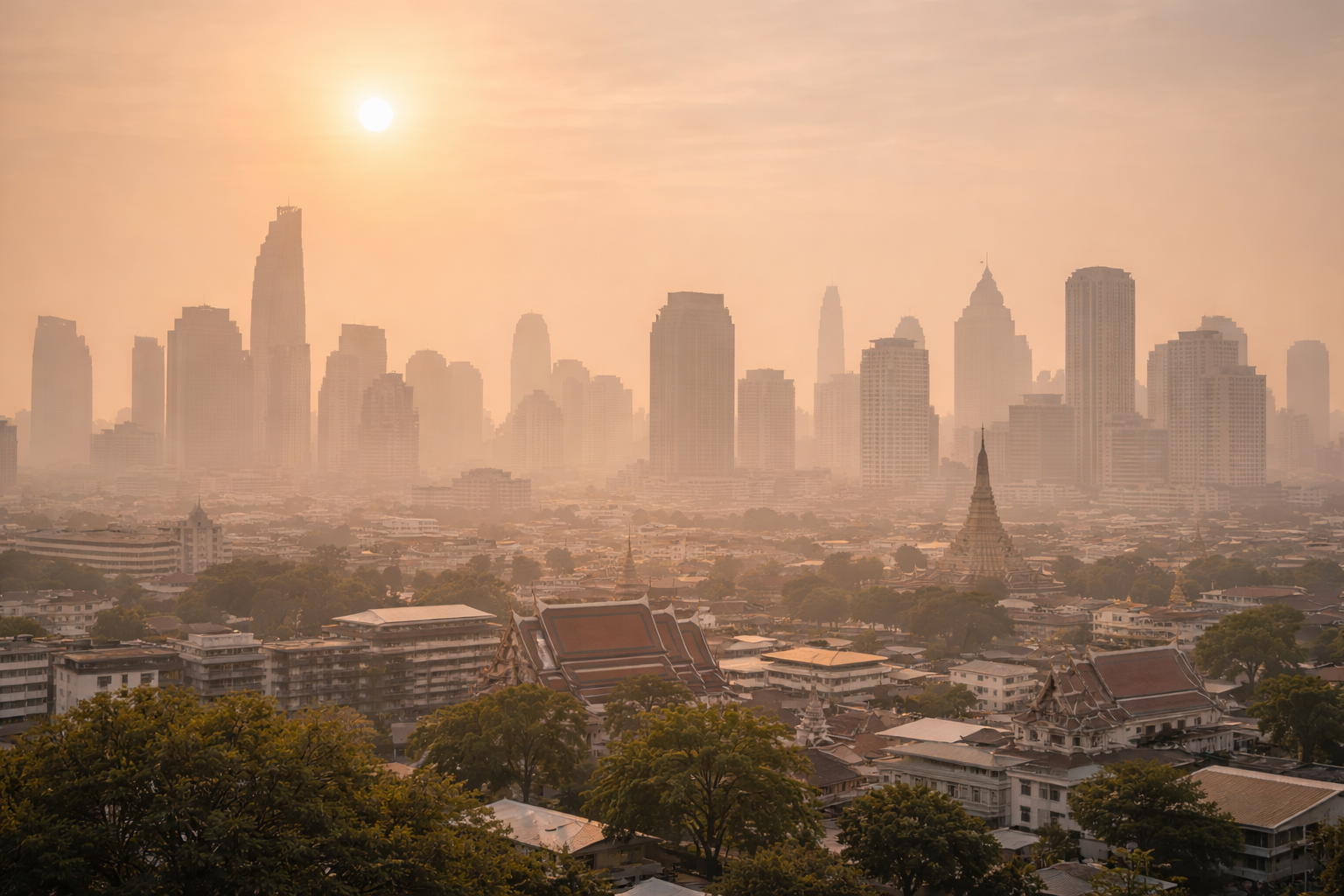
Thailand Air Quality (AQI/PM2.5): What to Know + What to Do
Track Thailand air quality with AQI/PM2.5 guidance for Bangkok, Chiang Mai, and key destinations. Includes burning season advice, health tips, and cleaner-air backup plans.
Last updated: February 19, 2026
Air quality in Thailand varies by season and region. If you’re planning the north (Chiang Mai / Chiang Rai / Pai) in late winter/spring, it’s smart to check AQI daily and plan a flexible itinerary.
This page includes:
- Live AQI modules we are finalizing
- Clear “what to do today” actions for different AQI ranges
- Practical travel routing tips (including “escape options”)
On this page
Live AQI cards
Live data modules for this section are being connected. Until then, use the planning guidance below.
Bangkok
- Bangkok — aqi now
- Bangkok — pm2.5 now
- Bangkok — next 24h trend
Chiang Mai
- Chiang Mai — aqi now
- Chiang Mai — pm2.5 now
- Chiang Mai — next 24h trend
Chiang Rai / Pai (optional)
- Chiang Rai — aqi now
- Pai — aqi now
Burning season basics
People call it “burning season,” “haze season,” or “smoke season.” In the north, this is often most noticeable in late winter to spring, but intensity varies year to year.
What drives it
- Agricultural burning in the wider region
- Weather patterns that trap smoke in valleys
- Local conditions (wind, humidity, rainfall)
What this means for travelers
- Some days are perfectly fine.
- Some days can be unpleasant if you’re sensitive.
- Your best tool is flexibility: don’t lock every day into outdoor hikes.
What to do on bad-air days
Use this simple decision guide (customize to your AQI source).
If air is “moderate”
- Outdoor activities are usually fine
- Consider limiting long, high-effort hikes if you feel irritation
If air is “unhealthy for sensitive groups”
- Swap to indoor activities (cafés, museums, cooking classes)
- Limit long outdoor exertion
- Consider a mask if you’re sensitive
If air is “unhealthy/very unhealthy”
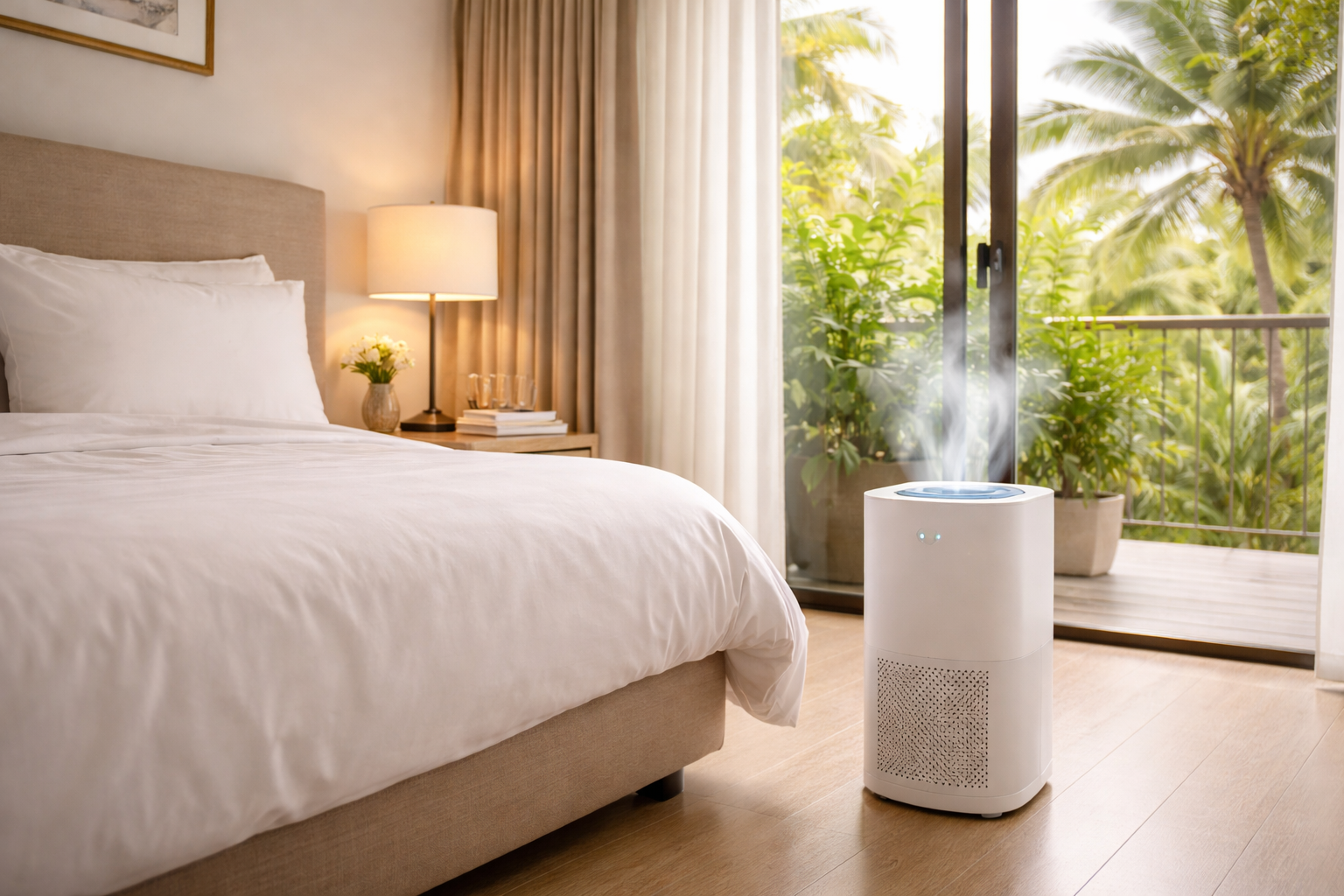
- Prioritize indoor, filtered-air spaces
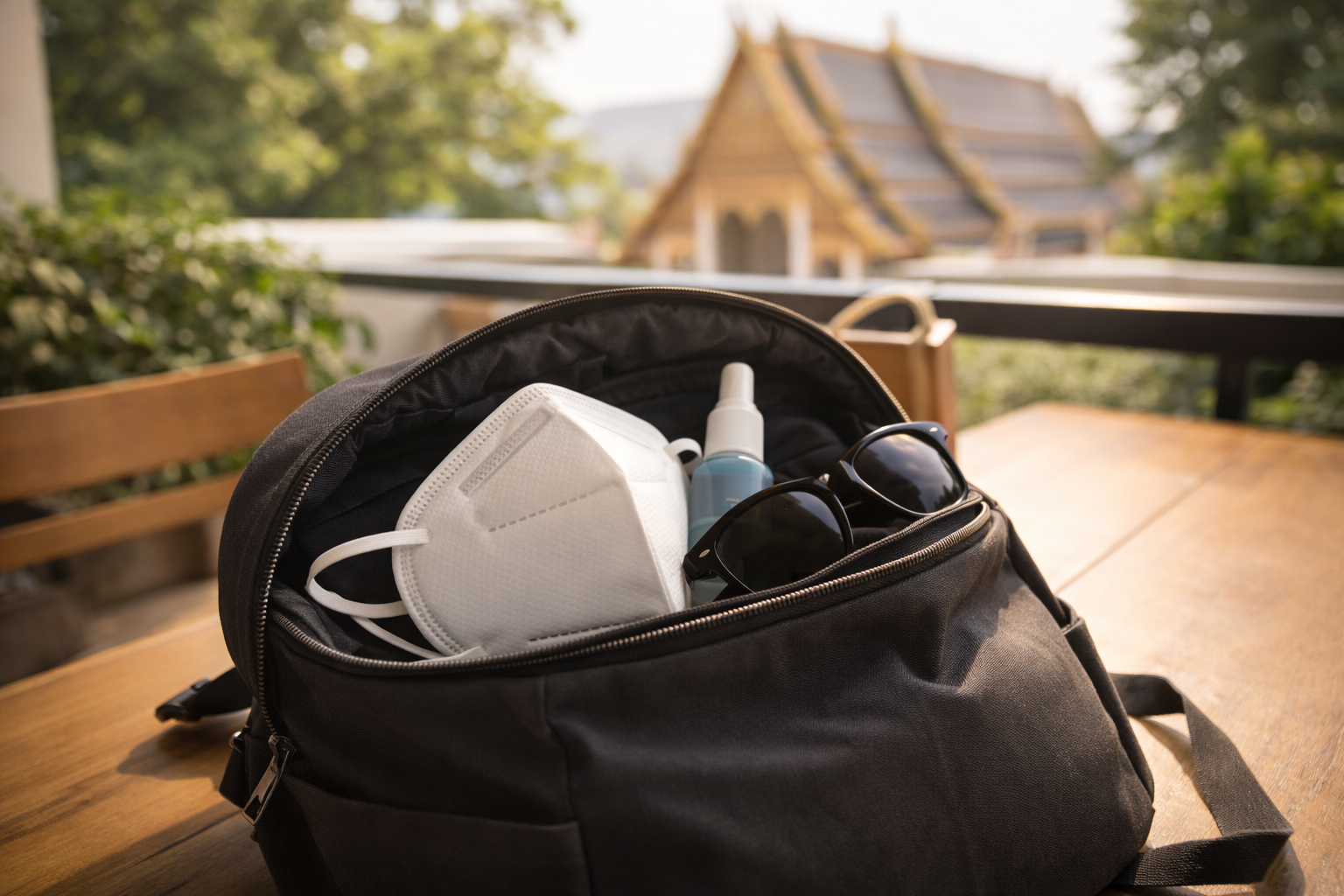
- Wear a proper particulate mask (e.g., N95-style) if you must be outside
- Consider changing route (south/islands often feel clearer)
Packing & health
High-value items
- A quality particulate mask (pack before you arrive)
- Eye drops (for dry/irritated eyes)
- Staying hydrated helps with comfort
If you have asthma/allergies
- Bring your usual medication and plan indoor days if AQI spikes
- Choose accommodation with air-conditioning and good sealing
Where to go for cleaner air
If north AQI looks bad for multiple days, you can re-route.
Common options
- Spend more time in Bangkok’s indoor-friendly neighborhoods (malls/museums/food)
- Head south: islands and coastal areas can feel better depending on winds
- Choose a different region for outdoor nature (use destinations hub)
Internal links:
- Destinations: Destinations
- Plan by month (season context): Plan By Month
- Weather now: Weather
AFFILIATE SLOT (later): Masks / air purifiers (hotel use) / flexible bookings — keep it practical and non-fear-based.
FAQ
Is Chiang Mai always smoky?
No. It varies by season and by year. If you’re visiting around the common haze period, check AQI daily and stay flexible.
Should I avoid the north completely?
Not necessarily. Many travelers still enjoy Chiang Mai with smart planning (indoor days + flexibility). If you’re highly sensitive, you may prefer visiting in clearer months.
Can rain “fix” the air?
Rain can improve air quality, but it’s not guaranteed. Use the trend guidance below to judge whether conditions are improving.